
NFL Betting Strategy Tips: Data-Driven Approaches for UK Punters
 Available in US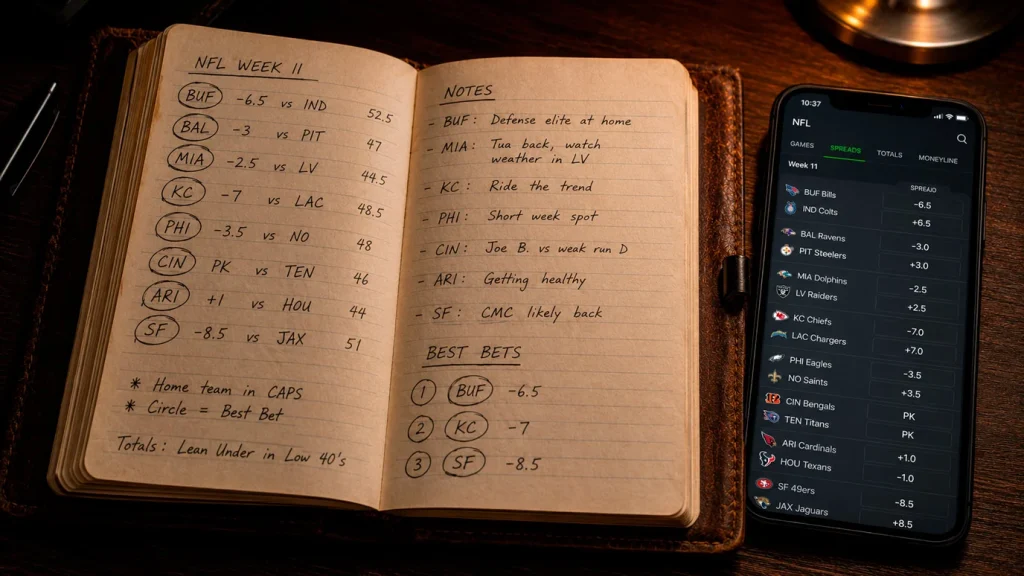
I lost my first full NFL season betting with gut instinct. Every Sunday felt like a coin flip dressed up in team colours, and the results matched. It took a miserable 4-12 stretch one November to force me into the data — and that pivot changed everything. Twelve years later, the single biggest lesson I pass on to UK punters is this: NFL betting rewards a system, not a hunch.
The NFL is the most wagered-on league in the world. A single Sunday afternoon window generates more handle than an entire week of MLB or NBA action combined. That volume creates inefficiencies — but only if you know where to look and have the discipline to exploit them consistently. Americans staked roughly $30 billion on NFL games during the 2026 season through legal sportsbooks alone, an 8.5% jump from the year before. The market is deep, liquid, and growing. For UK punters, that depth means opportunities — provided you bring a method rather than a mood.
This guide covers the three pillars I build every NFL betting framework around: bankroll management, ATS-driven value identification, and situational spot analysis. None of them require insider knowledge. All of them require patience.
See also point spread explained as a key strategy element.
Contents
Bankroll Management for NFL Bettors
The fastest way to blow up a season is to chase losses in Week 3. I know because I did it — doubled my standard stake on a Thursday night divisional game after a bad Sunday, convinced the data “owed” me one. It didn’t. The bankroll took a hit that shaped every decision for the next month.
Bankroll management is not glamorous, but it is the structural foundation that allows every other strategy to function. The principle is straightforward: define a total amount you are prepared to risk across an entire NFL season, then size each wager as a fixed percentage of that total. Most professional bettors I respect operate between 1% and 3% per bet. If your season bankroll is £2,000, a single wager sits between £20 and £60 — regardless of how “certain” you feel about the pick.
Why such small fractions? Because NFL seasons are long. An 18-week regular season, plus playoffs, gives you roughly 270 regular-season games to assess. Even the sharpest analysts in the industry hit around 55-58% against the spread over a meaningful sample. That edge is real, but it requires hundreds of bets to manifest. A few oversized wagers early in the campaign can destroy the bankroll before the strategy has time to breathe.
I use a flat-stake model: the same pound amount on every bet, recalculated monthly based on current bankroll. Some bettors prefer a unit system where they assign 1-3 units based on confidence, but in my experience this introduces subjectivity that erodes the discipline the system is supposed to enforce. If you cannot articulate — in writing, before the game — why a pick deserves a larger stake, it doesn’t.
Track everything. A spreadsheet with date, game, market, odds, stake, and result is the minimum. Over a full season, that record becomes your most valuable tool — not because it tells you what to bet next, but because it reveals patterns in your own decision-making. I discovered through tracking that my Thursday night record was significantly worse than my Sunday window record, which led me to cut Thursday plays almost entirely. The data was uncomfortable, but the bankroll appreciated it.
Using Against-the-Spread Records to Find Value
A team can win 12 games and still be a terrible bet. That contradiction confuses newcomers, but it is the foundation of NFL spread betting. Against-the-spread records strip away the narrative of wins and losses and expose what actually matters: did the team cover the number the market set for them?
ATS records are freely available on most NFL stats sites, and they tell you something that the standings table never will. A 10-7 team that went 6-11 ATS was overvalued by the market all season. A 7-10 team at 12-5 ATS was a quiet goldmine for anyone paying attention. The spread is the market’s opinion of the gap between two teams. When that opinion is consistently wrong, you have an edge.
I start each week by pulling the current ATS records for every team, then filtering for the extremes — teams above 60% ATS or below 40%. Those tails are where inefficiencies cluster. The next step is context: why is the market mispricing this team? Common drivers include public perception lag (a team improved mid-season but the spread still reflects their early struggles), key injuries that the line has over- or under-adjusted for, and schedule sequencing effects that I’ll cover in the next section.
One pattern I have tracked for years: teams coming off a bye week tend to be overvalued by the spread in their return game. The public assumes rest equals performance. The data is far less conclusive — bye-week teams in the NFL point spread context have covered at roughly league average over the past decade. The market prices in the “rest advantage” so aggressively that it often cancels out any real benefit.
The most reliable ATS signal I have found involves divisional underdogs. Teams within the same division play each other twice per season, which means scheme familiarity runs both ways. When a divisional underdog is getting more than a touchdown on the spread, I pay close attention — those teams cover at a rate that has been meaningfully above 50% across the last ten seasons. The familiarity effect compresses the talent gap, but the spread often reflects the regular-season record gap instead.
A word of caution: ATS records are descriptive, not predictive. A team that covered 11 of their first 13 spreads is not “due” to stop covering. But the underlying reasons they covered — a strong defence that keeps games close, a backup quarterback the market underrates, a favourable early schedule — can be assessed on their own merits for the weeks ahead.
Situational Spots: Bye Weeks, Divisional Games, Primetime
Week 14, 2023. A contender fresh off a dominant Monday night win travels cross-country to face a struggling team in an early Sunday kickoff. The spread was -7.5. They lost outright. I had that game circled as a situational spot three days before kickoff, and it remains one of my cleanest examples of why schedule context matters as much as talent.
Situational spots are recurring schedule patterns that create predictable performance distortions. They are not guarantees — nothing in NFL betting is — but they tilt probabilities in ways the market does not always price in. The three I track most closely are letdown spots, lookahead spots, and primetime travel.
A letdown spot occurs when a team follows a high-emotion, high-intensity game with a matchup against a weaker opponent. The classic version: a team beats a divisional rival in a close Sunday night game, then faces a sub-.500 team the following week. Motivation drops. Preparation quality dips. The spread expects them to dominate, but their actual performance regresses toward the mean. I look for letdown spots most aggressively after primetime divisional wins.
Lookahead spots are the mirror image. A team faces a relatively easy game in Week N, but Week N+1 features a marquee matchup or a divisional rival. Coaches publicly insist they take every game one at a time — and some genuinely do — but players are human. Mental preparation for the big game starts early, and the “easy” game gets less focus than it should. When a lookahead spot aligns with a team that is already showing ATS regression, the convergence of signals is strong.
Primetime travel is the most mechanical of the three. West Coast teams travelling east for a 1:00 PM ET kickoff — which is 6:00 PM UK time, the opening Sunday window — face a body-clock disadvantage. Their 10:00 AM Pacific start is biologically earlier than what they train for. The data shows these teams cover at a slightly below-average rate, and the effect magnifies when they are favoured. Bill Miller, the AGA president, noted that legal sports betting enhances the competition that makes NFL traditions special — and situational awareness is one of those traditions the sharpest bettors have always exploited.
The key with situational analysis is layering, not isolation. A letdown spot alone is not a bet. A letdown spot combined with a poor ATS trend, a key injury, and an inflated spread — that convergence is a bet. I keep a simple grid: if three or more independent factors align, the play goes into my weekly card. If only one or two line up, I pass. Patience is the hardest part, but it is what separates a system from a gamble.
See also nfl bet online for the complete NFL betting guide.
From Numbers to Decisions: Building Your Weekly Process
Every strategy in this guide reduces to a single discipline: making fewer, better-informed decisions. The NFL gives you 270-plus regular-season games, a playoff bracket, and a Super Bowl. You do not need to bet them all. I typically put serious action on 30-40 games per season — roughly two or three per week — and that restraint is responsible for most of my edge.
Start with a defined bankroll and fixed stakes. Pull ATS records midweek and flag the extremes. Cross-reference those flags against the schedule for situational spots. When three independent signals converge, place the bet. When they don’t, close the app and watch the game for fun. The process sounds mechanical because it is — and that is precisely why it works in a market where most participants are betting on emotion, loyalty, and last week’s highlights.
