NFL Draft Betting UK: First Pick Odds, Props and Markets Guide
 Available in US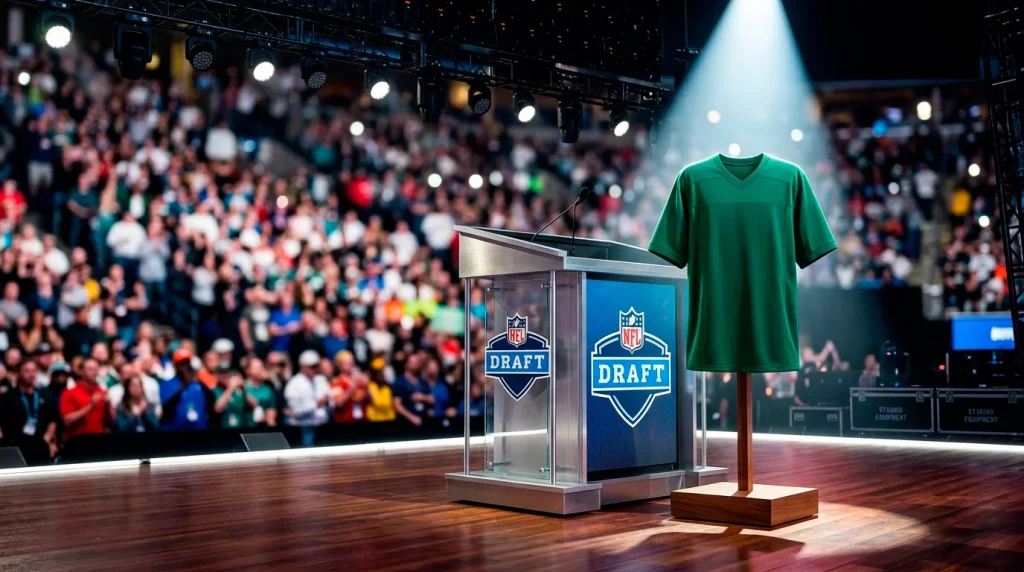
Draft night is the strangest betting event on the NFL calendar. No ball is thrown, no tackle is made, and the outcome depends entirely on decisions made in boardrooms by general managers whose thought processes are, at best, partially public. I backed Travon Walker to go first overall in 2022 at 5/2 three weeks before the draft. By draft night, he was 1/5. The price collapsed because information leaked — mock drafts shifted, beat reporters confirmed the direction, and the market followed. That lag between the information entering public discourse and the odds adjusting is where draft betting lives.
The NFL generates $132 million annually in gambling-related sponsorship revenue, and draft night is one of the tent-pole events that drives engagement. UK sportsbooks have expanded their draft betting menus significantly over the past five years, transforming what was once a single “first overall pick” market into a multi-layered offering with positional props, over/under lines, and team-specific picks.
See also NFL season structure guide for the full calendar.
Contents
NFL Draft Betting Markets Available in the UK
The anchor market is first overall pick. Every major UK sportsbook prices this, and it typically opens within days of the Super Bowl — roughly three months before the draft itself. Early prices reflect a combination of prospect rankings, team needs, and the media consensus on the draft order. Americans wagered approximately $30 billion on NFL during the 2026 season, and while the draft itself generates a fraction of that figure, it attracts significant interest because it sits in the off-season dead zone when no other NFL betting is available.
Beyond the first pick, UK sportsbooks offer several supporting markets. Top-five pick props let you bet on whether a specific player will be selected within the first five picks. Top-ten equivalents expand the range. Positional markets ask which position will be selected first overall, or first at each position group — first quarterback taken, first wide receiver taken, first offensive lineman taken. These positional markets reward a different type of research: understanding not just who the best prospect is, but how teams at the top of the draft prioritise position value.
Over/under markets on specific draft positions are the most analytically interesting. A line might be set at “Player X: draft position over/under 7.5.” If you believe the player goes in the top seven, you bet under. If you believe he slides, you bet over. These markets are priced on mock draft consensus, but the consensus is often wrong at the margins — especially for players in the 5-to-15 range where team trades can reshuffle the entire board.
Team-specific props — “Which player will Team X select with their first-round pick?” — are available for a handful of high-profile teams. These are the hardest markets to price because they depend on information that is deliberately concealed. Teams run disinformation campaigns in the weeks before the draft, floating misleading reports to misdirect rivals. That same misdirection affects the betting market, creating both risk and opportunity for punters who can filter noise from signal.
Why Draft Odds Move: Mock Drafts, Trades, and Rumours
Draft odds are uniquely sensitive to information flow because the event outcome is determined by human decisions, not athletic performance. A quarterback’s forty-yard dash time at the NFL Combine does not change by itself — but the narrative around it can change overnight if an influential analyst reinterprets the data.
Mock drafts are the primary driver of odds movement. When a consensus mock draft from a major outlet shifts a player from third to first, the sportsbook adjusts within hours. The efficient market hypothesis works imperfectly here because mock drafts reflect speculation, not inside knowledge. A mock draft published in February is a guess. A mock draft published on the Monday before draft night is a more educated guess, but still a guess. The sportsbook treats both as signal, which means the pricing is reactive to media cycles rather than grounded in confirmed information.
Trade rumours are the second driver. If reports surface that a team is trading up from pick six to pick two, the entire top-five market shifts. The player most commonly associated with that team’s needs sees their draft position odds shorten immediately. These rumours are sometimes accurate, sometimes planted, and always impactful on odds. I track them through official team beat reporters rather than national aggregators — the beat reporter who covers a specific team’s practice facility has better sourcing than a national pundit making broad predictions.
The NFL Combine (late February/early March) and individual pro days (March/April) produce measurable physical data that can move specific player markets. A quarterback who throws poorly at the Combine might see his first-overall-pick odds drift from 3/1 to 8/1 within 48 hours. Conversely, an athletic freak performance from an unexpected prospect can create sudden market movement. The connection between draft and futures betting is direct — a team that drafts a franchise quarterback sees its Super Bowl odds shorten immediately, and sharp bettors position themselves in futures markets before the draft to capture that anticipated movement.
See also nfl bet online for the complete NFL betting guide.
A Practical Approach to NFL Draft Betting
Peter O’Reilly, the NFL’s EVP for Club Business and International, described the 2026 schedule as “our most expansive and ambitious international slate yet” — and the draft is where that ambition starts, because draft picks determine which rosters will travel to London, Munich, and São Paulo. The players selected in late April shape the narratives that drive betting markets from September through February.
My draft betting approach is built on three rules. First, bet early on strong convictions. If your research points clearly toward a specific first overall pick, the best price is available months before the draft. Waiting for confirmation means paying a compressed price. The risk of being wrong early is real, but the reward for being right early is substantially larger.
Second, focus on the over/under position markets rather than the outright first pick. The first overall selection is heavily scrutinised and efficiently priced by draft night. The over/under on a player’s draft slot is less liquid, less scrutinised, and more susceptible to your own analysis adding value. A player projected to go eighth overall who you believe will go fourth based on a team’s specific positional need is an under bet with genuine edge.
Third, treat draft night itself as a watching brief, not a betting session. By the time the commissioner walks to the podium, the odds on most first-round markets have compressed to the point where the value has evaporated. The edge was in February, March, and early April. By late April, you are either collecting on positions you took weeks ago or watching from the sideline. Both outcomes are fine.
