
NFL Moneyline Betting UK: How Outright Winner Bets Work
 Available in US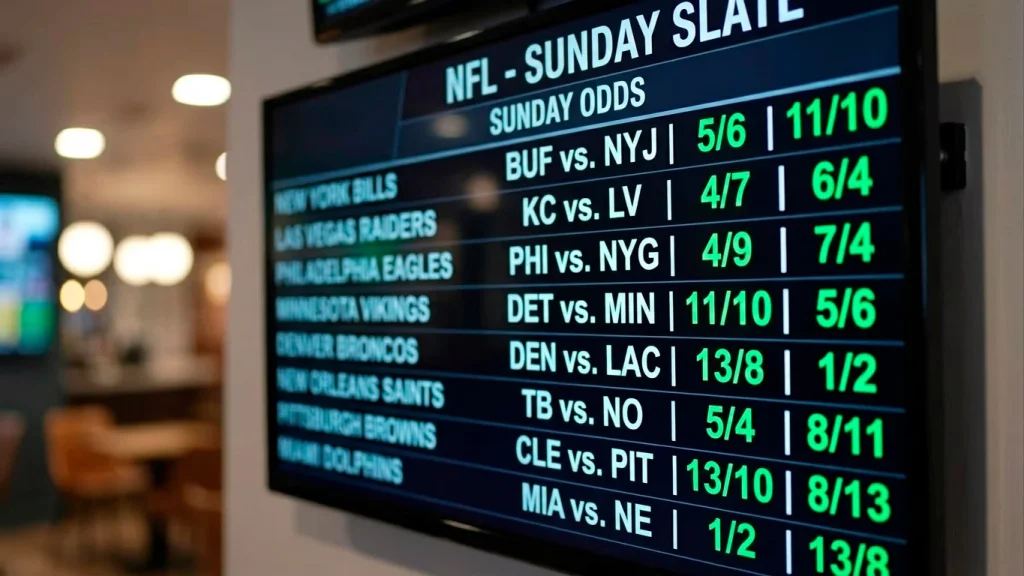
My first ever NFL bet was a moneyline. Kansas City to beat Denver, straight up, no spread involved. I picked it because it was the simplest thing on the slip — one team wins, I get paid. That simplicity is deceptive, though. After twelve years of analysing NFL wagering markets, I have learned that the moneyline is both the easiest market to understand and one of the trickiest to bet profitably.
The NFL dominates legal sports betting volume like no other league — a single Sunday window generates more handle than an entire week of MLB or NBA action. A huge share of that action lands on moneylines because the bet asks only one question: who wins? No margins, no point differentials, no complicated maths. For UK punters accustomed to “match result” markets in football, the moneyline is the closest equivalent in American football.
But straightforward does not mean easy money. The prices on heavy favourites can be brutally thin, while underdog moneylines carry risk that is easy to underestimate. This guide breaks down how moneyline pricing works, when to choose it over the spread, and where the genuine value tends to hide.
See also NFL betting strategy for moneyline approaches.
Contents
What a Moneyline Bet Means in NFL
Strip away every complex market in the NFL betting menu and you are left with the moneyline: pick the team that wins the game. No handicaps, no totals, no props. If your team finishes with more points when the clock hits zero — or at the end of overtime — the bet settles as a winner.
At UK sportsbooks, moneyline odds are typically displayed in fractional format. A strong favourite might be priced at 1/4, meaning you stake £4 to win £1 profit (plus your £4 back). An underdog could sit at 3/1, returning £3 profit for every £1 staked. The numbers reflect how likely the market considers each outcome. When you see a team at 1/8, the market is saying they win this game roughly 89% of the time. At 5/1, it’s closer to 17%.
One thing that trips up UK bettors new to the NFL: there are no draws in American football. Regular-season games that are tied after four quarters go to a ten-minute overtime period, and if it remains tied after that, the game ends as a tie — but this is extraordinarily rare. In the playoffs, overtime continues until someone scores. For moneyline purposes, most UK sportsbooks settle on the final result including overtime. Always check the settlement rules with your specific book, especially during the regular season when that rare tie scenario can void moneyline bets entirely.
The moneyline exists as a pure expression of win probability. Every other NFL market — spread, totals, props — layers additional conditions on top. That purity makes the moneyline the foundation: if you cannot assess which team is more likely to win and at what probability, every other market becomes guesswork.
Moneyline vs Spread: Choosing the Right Market
I get asked this question more than any other: “Should I bet the moneyline or the spread?” The honest answer is that they serve different purposes, and choosing between them depends on your read of the game.
The spread sets a margin. If a team is -6.5, they need to win by seven or more for the bet to pay. The moneyline ignores margins entirely — win by one or win by thirty, the result is the same. This distinction matters most at the extremes. When a team is a heavy favourite at -10.5 on the spread, the moneyline price might be something like 1/7. Covering a double-digit spread requires dominance; winning outright just requires being better on the day. Those are very different propositions.
In-play betting has shifted this calculation significantly. Live betting now accounts for over 62% of online sportsbook revenue globally, and NFL in-play markets move rapidly. A team that falls behind early can see their moneyline drift to attractive prices even if the pre-match spread suggested they were evenly matched. I often prefer to wait for in-play moneyline opportunities rather than committing to a pre-match spread, especially in games I expect to be competitive through three quarters.
For UK punters, the practical rule I use is this: if I believe a team will win but I am uncertain about the margin, I take the moneyline. If I believe the margin will be large, I take the spread — because the spread pays closer to even money regardless of how lopsided the matchup is, while a heavy moneyline favourite offers thin returns for the risk involved. A team priced at 1/5 on the moneyline needs to win five out of six times just to break even. That is a high bar, even for genuinely strong teams.
There is a middle ground that experienced bettors exploit: converting between the fractional and American odds formats to compare the implied probability of the moneyline against the spread’s implied win rate. If the moneyline implies 75% and your own model says 80%, the moneyline has value. If the spread implies a seven-point win and you see a three-point game, the underdog spread has value instead. The market you choose depends on where the mispricing sits, not on a blanket preference.
When Underdog Moneylines Offer Value
Backing favourites on the moneyline is comfortable. It is also, over a large enough sample, a reliable way to grind a bankroll to nothing. The maths is unforgiving: at 1/4, you need to win 80% of your bets to break even. No team in the NFL wins 80% of their games consistently across multiple seasons. The value in moneyline betting almost always sits with underdogs — if you can identify the right ones.
Not every underdog is worth a look. The sweet spot, in my experience, falls between 6/4 and 4/1 on the fractional scale. These are teams the market considers competitive but unlikely to win — roughly a 20-40% implied probability. The key is identifying situations where the actual probability is higher than what the price reflects.
Three patterns produce underdog moneyline value more reliably than others. First, divisional underdogs in the second meeting of the season. By the time two divisional rivals meet for the second time, the underdog has film, familiarity, and a chip on their shoulder from the earlier result. These teams outperform their implied probability at a consistent clip.
Second, underdogs coming off a bye week against favourites who played a physical game the previous Sunday. The rest advantage is real in this specific configuration — not because the underdog is suddenly better, but because the favourite may be dealing with accumulated fatigue and minor injuries that do not appear on the injury report. The market adjusts for bye weeks, but it tends to under-adjust when the opponent’s previous game was particularly bruising.
Third, home underdogs in bad weather. Rain, wind, or extreme cold compresses the talent gap between teams because it limits the passing game — which is typically the favourite’s primary advantage. A dome team travelling to Green Bay in December at 2/1 on the moneyline is a very different proposition from the same team playing in a climate-controlled environment.
The discipline with underdog moneylines is accepting the loss rate. Even a profitable underdog strategy will lose more bets than it wins. Over a season, hitting 35-40% at average odds of 5/2 produces a healthy profit — but that means losing six or seven out of every ten bets. If the losing streaks shake your confidence or your bankroll management, this market is not for you.
See also nfl bet online for the complete NFL betting guide.
Reading the Moneyline Before You Click
The moneyline is where NFL betting begins, and for plenty of bettors it is where it should stay. Not every market needs to be complex to be profitable. The clarity of a moneyline — one team wins, one team doesn’t — forces you to answer the most fundamental question in sports betting: who is going to win this game, and what probability does the price reflect?
Before placing any moneyline wager, I run through three checks. Is the implied probability lower than my assessed probability? Does the situational context support the pick? And does the stake fit within my bankroll rules? If all three answers are yes, the bet goes on. If any answer is no, I move to the next game. That filter has saved me more money than any single pick ever made.
