
NFL Over/Under Explained: How Totals Betting Works for UK Punters
 Available in US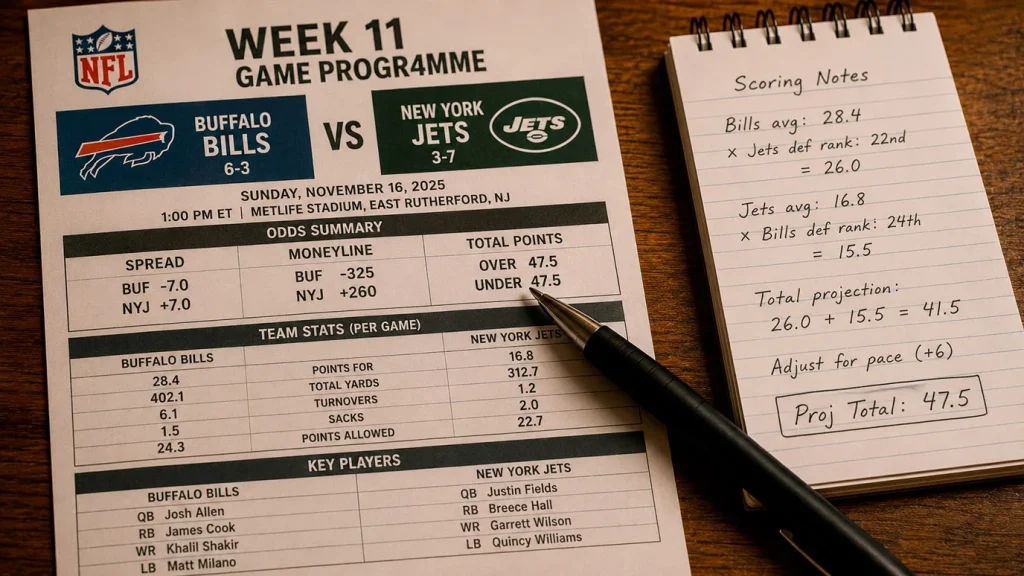
I once watched a game finish 6-3 after backing the over at 44.5. Nine points. Total. In a sport designed to produce touchdowns. That afternoon taught me something valuable: totals betting is not about what the game should produce — it is about what the game will produce given specific conditions that most bettors ignore.
The over/under — also called the total — is the third pillar of NFL betting alongside the moneyline and the spread. The sportsbook sets a number representing the expected combined score of both teams. You bet on whether the actual combined score will finish above (over) or below (under) that number. A single Sunday afternoon window in the NFL generates more betting handle than an entire week of MLB or NBA action, and totals account for a substantial slice of that volume because they offer a completely different angle from picking a winner.
See also NFL moneyline betting as a simpler alternative.
Contents
How NFL Over/Under Lines Are Set
There is a common misconception that totals lines are set by a room of analysts watching film. The reality is more mechanical — and understanding the mechanics gives you an immediate advantage over bettors who treat the number as a prediction.
Sportsbooks set the opening total using power ratings for both teams, which are themselves derived from offensive and defensive efficiency metrics. Each team has an implied points-per-game figure. Add the two together, adjust for home-field advantage and weather, and you get the opening line. A game between two high-powered offences might open at 52.5. A game between two defensive units with limited offensive support might open at 38.5. The number is not a forecast of the most likely score — it is the number that the sportsbook believes will attract equal action on both sides.
That distinction is critical. The sportsbook is not trying to predict the final score. It is trying to set a price where half the money goes over and half goes under, allowing the margin (vig) to guarantee a profit regardless of outcome. When the opening total is “wrong” in one direction — perhaps it opened too high because the market overvalues a high-scoring team from last season — early sharp action pushes the line down, and the adjustment window before kickoff is where I find the most value.
NFL totals have trended upward over the past decade, reflecting rule changes that favour offensive production — fewer defensive holding penalties, quarterback protection rules, and wider passing windows. The league-average total in 2015 sat around 43.5. By 2026, it had crept above 46. That structural shift means historical under performance data needs to be adjusted for era — an under at 44 in 2016 is a different proposition from an under at 44 in 2026.
What Drives NFL Scoring Totals
Three variables matter more than everything else combined when I assess a total: pace, turnovers, and weather. Not offensive talent. Not defensive rankings in isolation. The interaction of pace, mistakes, and environment.
Pace determines opportunity. A team that runs 70 offensive plays per game creates more scoring chances than one that runs 55. When two up-tempo offences meet, the total play count can exceed 140, which inflates scoring probability. When two ball-control, run-heavy teams meet, total plays might sit below 120, and the compressed opportunity set suppresses scoring. I pull pace data from the weekly stats pages and compare the two teams’ averages — when both are in the top ten for pace, the over hits at a meaningfully higher rate than the market’s implied probability suggests.
Turnovers are the most volatile factor. A fumble recovered at midfield creates a short-field scoring opportunity that inflates the total. An interception returned for a touchdown adds points without any offensive drive at all. Because turnovers are heavily random — they correlate weakly from game to game — the total cannot reliably account for them. This randomness works in the under’s favour more often than not, because the baseline scoring model assumes some level of turnover regression. When two teams with high turnover rates meet, the over can look tempting, but the variance cuts both ways.
Weather is the under’s best friend. Wind, specifically. Rain affects ball security, but wind directly suppresses the passing game — and the passing game drives the majority of NFL scoring. When sustained winds exceed 15 mph at kickoff for an outdoor game, I automatically flag the under for closer analysis. The market adjusts for weather, but in my experience it adjusts by one to two points, while the actual scoring impact in genuinely windy conditions is often three to five points. That gap is where the edge sits.
Strategies for Betting NFL Overs and Unders
My approach to totals has evolved significantly over twelve years. Early on, I defaulted to the over — higher scores are more exciting, and the bias toward offence in modern NFL seemed like a permanent tailwind. The data corrected that instinct. Over the past five seasons, overs and unders have hit at close to 50-50 across the league, which means neither side carries a structural edge. The edge is situational, not directional.
Live totals have become my preferred entry point. In-play wagering now accounts for over 62% of online sportsbook revenue globally, and totals are one of the most actively traded in-play markets. The reason is simple: scoring is lumpy in football. A game can be 0-0 after the first quarter and the live total drops sharply, only for a flurry of touchdowns in the second quarter to push it back up. If I have a pre-match view on the over but the first quarter is scoreless, the live total often gives me a better number than I would have had pre-match.
Team totals — betting on one team’s individual score rather than the combined total — are an underused market at UK sportsbooks that deserves more attention. The combined total forces you to assess both offences and both defences. A team total isolates one side of the ball. If I am confident that Team A’s defence will dominate but less sure about Team A’s own offence, I can bet Team B’s team total under without needing to assess the full game. It is a cleaner, more focused position.
One strategy I use specifically for NFL Sundays: comparing the opening line to the current line at kickoff. If a total opened at 48 and has moved to 45.5 by Sunday morning, that three-point drop usually signals sharp money on the under. I do not blindly follow the move, but I treat it as a strong signal that my independent analysis needs to confirm. When my own assessment aligns with the direction of the sharp move, the convergence of signals justifies a larger position within my standard spread and totals staking plan.
See also nfl bet online for the complete NFL betting guide.
When Nine Points Changes Everything
That 6-3 game I mentioned in the opening — the one that finished 38 points below the total — was an outdoor December game in 25 mph winds between two teams ranked in the bottom ten for pace. Every variable pointed under. I bet the over because both teams had quarterbacks averaging 280 passing yards per game. Season averages told one story. The game conditions told another. The conditions won.
Totals betting punishes narrative and rewards conditions. The numbers on the screen — the team averages, the rankings, the season stats — matter less than the circumstances of the specific game being played. Master the circumstances, and the totals market becomes one of the most consistent edges in NFL betting.
